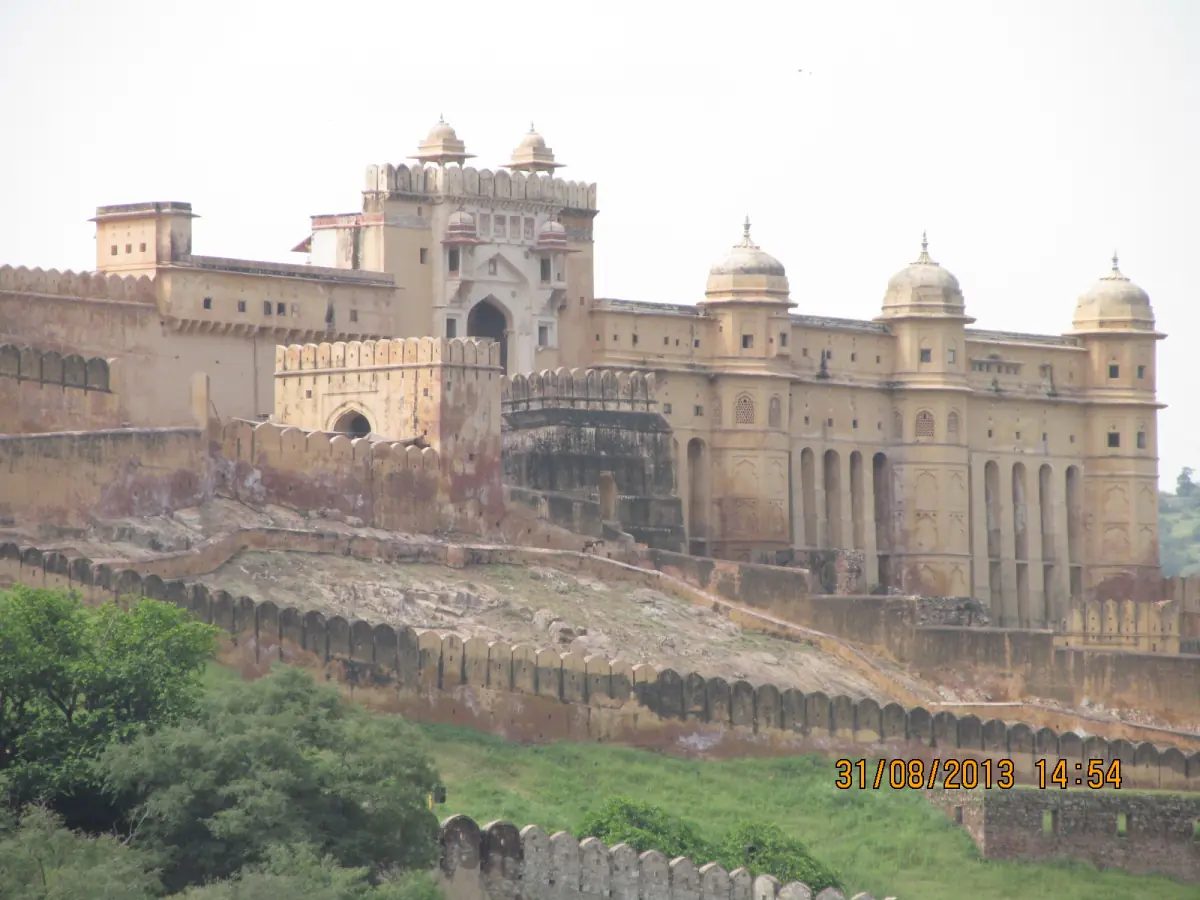
A palace built in stages
Amber Fort is not a building from a single year. The palace as you see it was begun in 1592 by Raja Man Singh I and completed by Mirza Raja Jai Singh. That date refers to the palace complex, not to the first settlement at Amber, which is older.
The Kachwaha dynasty ruled from Amber. Later the seat of government moved from the hill to the plain, to Jaipur. The palace on the hill remains as a monument of that period.
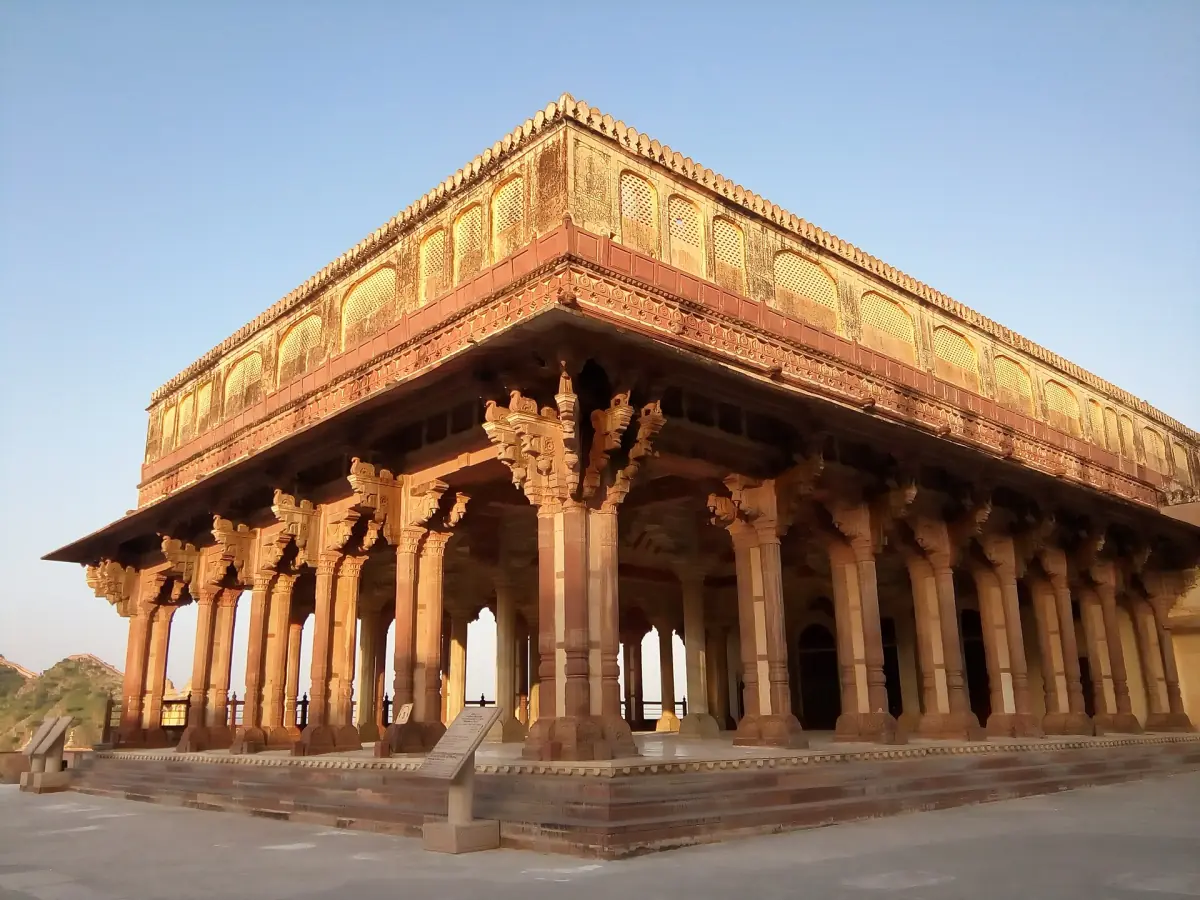
The main dates
What can be said with some confidence.
1592: the palace begins
Work on the palace starts under Raja Man Singh I. Mirza Raja Jai Singh is named as the one who completed it. Do not read this as the age of the whole hill, since people lived and ruled at Amber before this.
17th century: Jai Singh I adds buildings
The halls and gardens that Mirza Raja Jai Singh I added in the 17th century are singled out as an expression of the Rajput-Mughal court style. This is why the fort is not one uniform build, but a layered one.
1726 and 1734: the forts above
Jaigarh Fort was commissioned in 1726 by Jai Singh II as part of the defence of Amer. Nahargarh Fort was built under Jai Singh in 1734 and enlarged later. Both are covered on their own pages.
Jaigarh Fort →2013: World Heritage listing
Amber is one of six components of the serial site Hill Forts of Rajasthan, listed in 2013.
Amber Fort tours with a guide
Guided visits that bring the history to life on site, with live prices and availability.
What the UNESCO listing covers
The wording is easy to misread.
The site is called Hill Forts of Rajasthan. It has six parts: Amber, Chittorgarh, Kumbhalgarh, Ranthambore, Gagron and Jaisalmer. Amber is one of them. Jaigarh and Nahargarh are not part of this listing, so it is wrong to say that Amber, Jaigarh and Nahargarh are listed together.
The listing stresses the buildings and gardens that Mirza Raja Jai Singh I added in the 17th century. They show the Rajput-Mughal style of court architecture.
Amber is also a protected monument under the state's law on monuments. The protection includes an additional buffer zone of 50 m. This is a planning rule for the area around the monument. It is not a distance you must keep from the walls as a visitor.
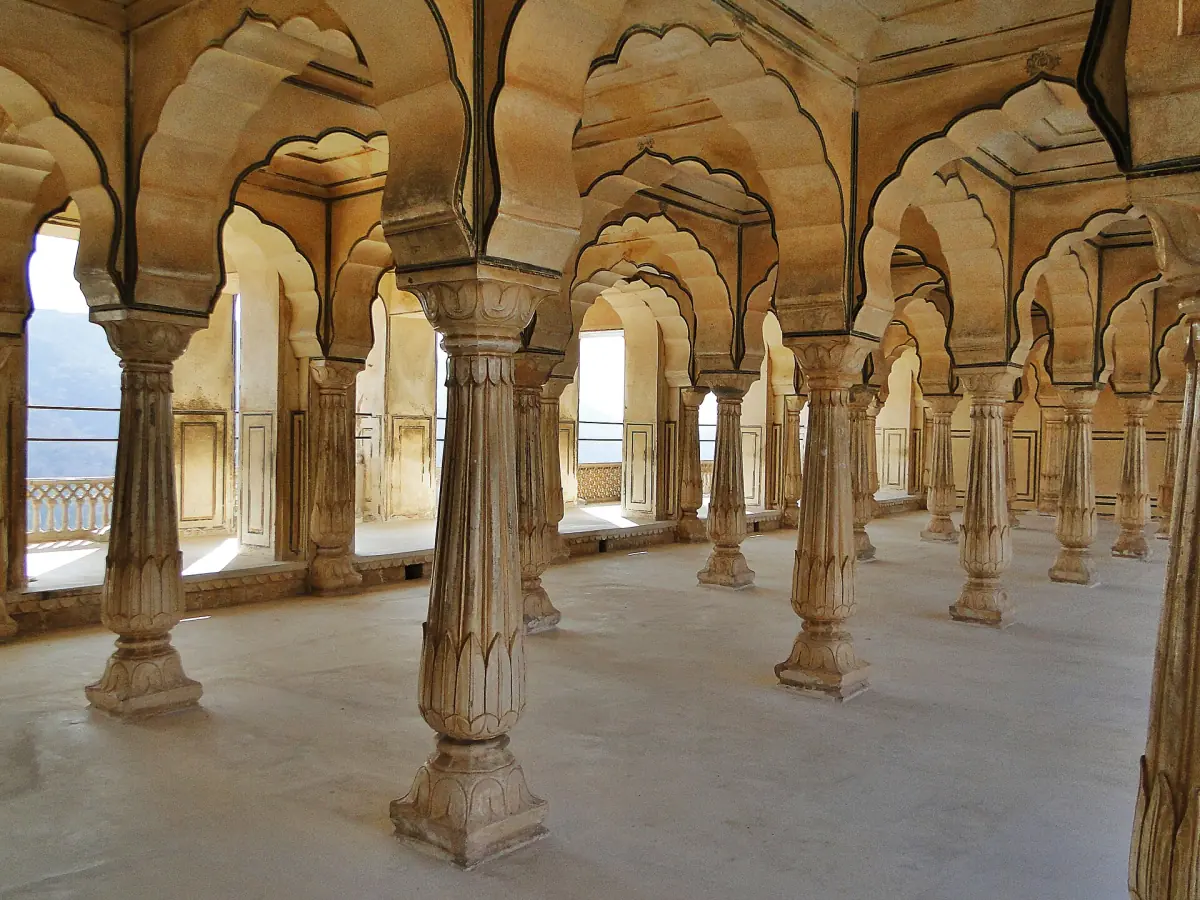
Stories and old claims
Treat these with care.
"Seven centuries old"
You will see phrases like this in tourist material. They do not date the rooms you walk through. For the palace use 1592 and the later building phases instead.
Panna Meena ka Kund
The stepwell below the fort is thought to date from the 16th century, but that date is a presumption. A legend about its founder is told as a legend, not as the biography of an architect.
Panna Meena ka Kund →The Sheesh Mahal and its candle
The tale of the single candle is a story. The mirrored hall itself is described on its own page.
Sheesh Mahal →See the history on site
Where to continue.
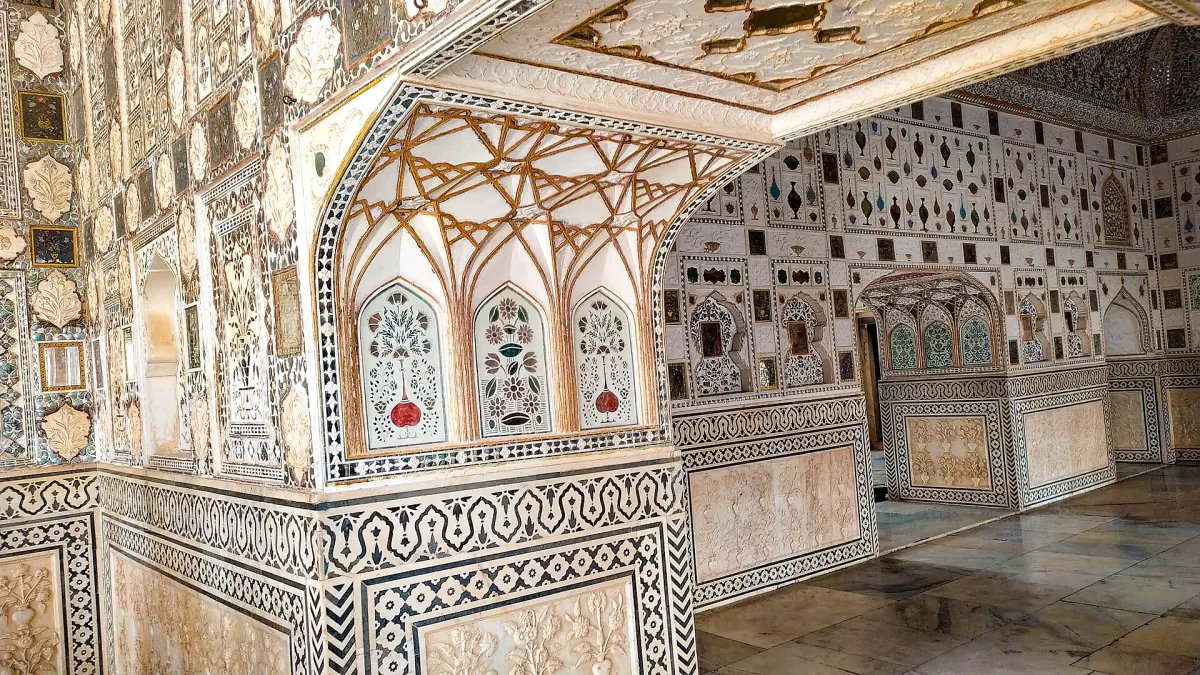
The Sheesh Mahal
The mirror palace and the halls near it.
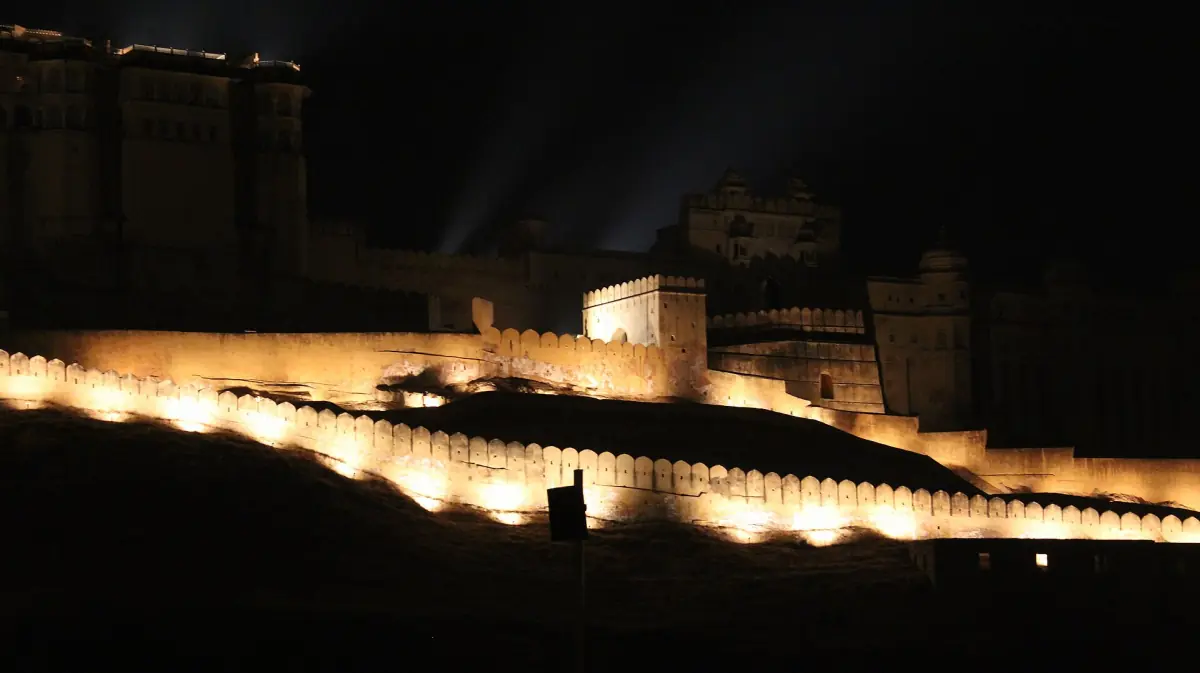
Light and sound show
The story of Amber told after dark.
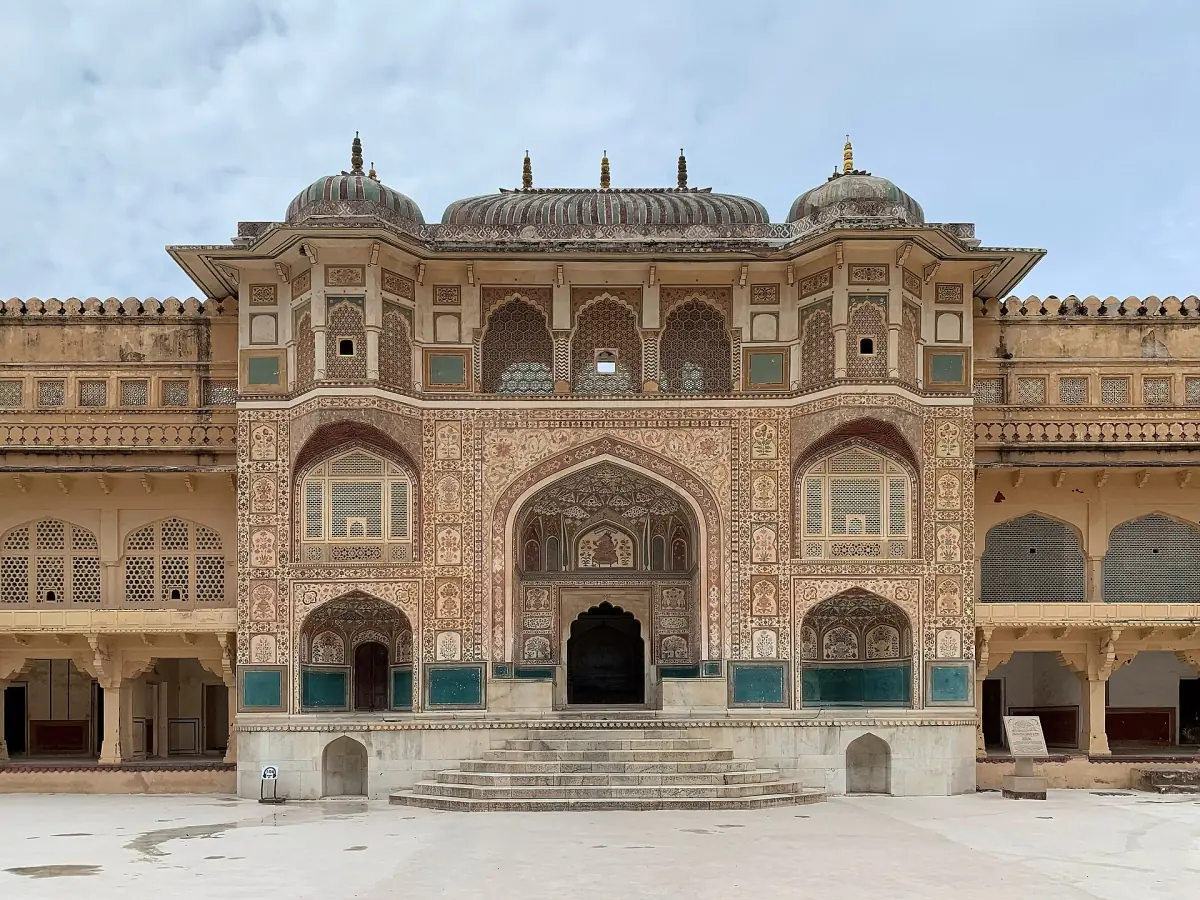
Amber Fort tickets
Entry rates for 2026.
For the story of Jaipur itself, the city that took over from Amber as the seat of rule, see the guide to the history of Jaipur.
Amber Fort history: frequently asked questions
Who built Amber Fort?
The palace was begun in 1592 by Raja Man Singh I and completed by Mirza Raja Jai Singh. Mirza Raja Jai Singh I later added buildings and gardens in the 17th century.
Who ruled from Amber?
The Kachwaha dynasty. The seat later moved to the plain, to Jaipur.
Is Amber Fort a UNESCO World Heritage site?
Yes, as one of six forts in the serial site Hill Forts of Rajasthan, listed in 2013.
Are Jaigarh and Nahargarh also World Heritage sites?
They are not part of the Hill Forts of Rajasthan listing. The six parts are Amber, Chittorgarh, Kumbhalgarh, Ranthambore, Gagron and Jaisalmer.
Is the fort seven centuries old?
Not as a palace. The date tied to the palace is 1592, with later additions in the 17th century.